Brand, visualisation & web
Launching a boat before it touches the water
Conde Racing Lab was preparing to reveal Project33, a new foiling catamaran, before the boat was ready to be photographed. We created the launch identity, website and visual material, including a parametric 3D model built with AI-assisted scripting. The result gave the project a complete visual presence ahead of its first public reveal.
The challenge
A boat launch usually starts with photographs. Project33 had no finished boat to photograph, but the reveal date was fixed. The identity, imagery and website all had to come together in the right order, and the visuals had to stand up to the scrutiny of people who know foiling boats inside out. The geometry had to feel believable, not just look impressive.
What we did
- Created the Project33 visual identity and a practical design system for use across the boat, sails, digital channels and launch material.
- Built a two-stage website: a pre-launch page followed by a complete reveal experience, ready to go live on launch day.
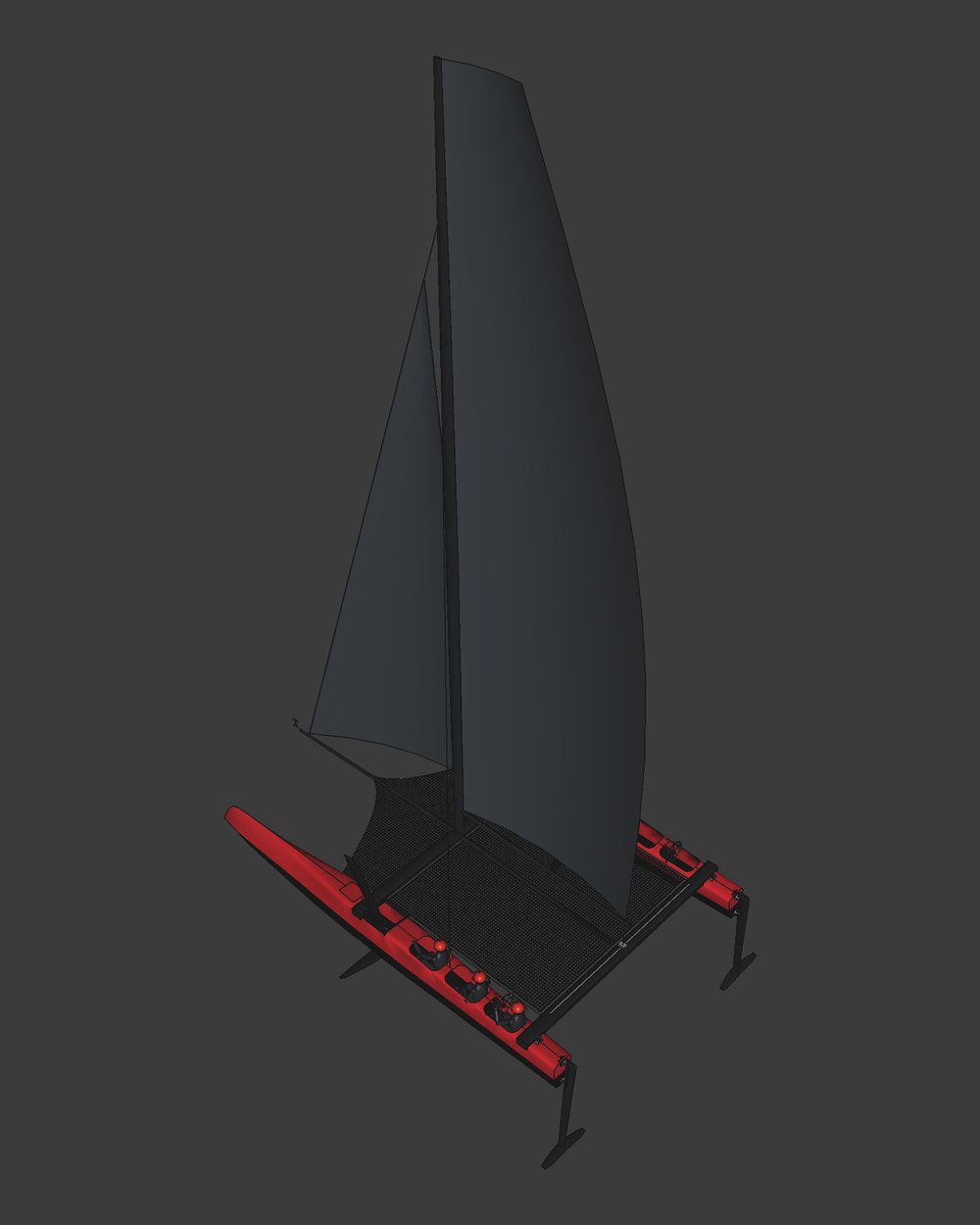
- Developed an AI-assisted parametric 3D model and used it to produce consistent, photorealistic images and film.
Approach
1. Give the project its identity
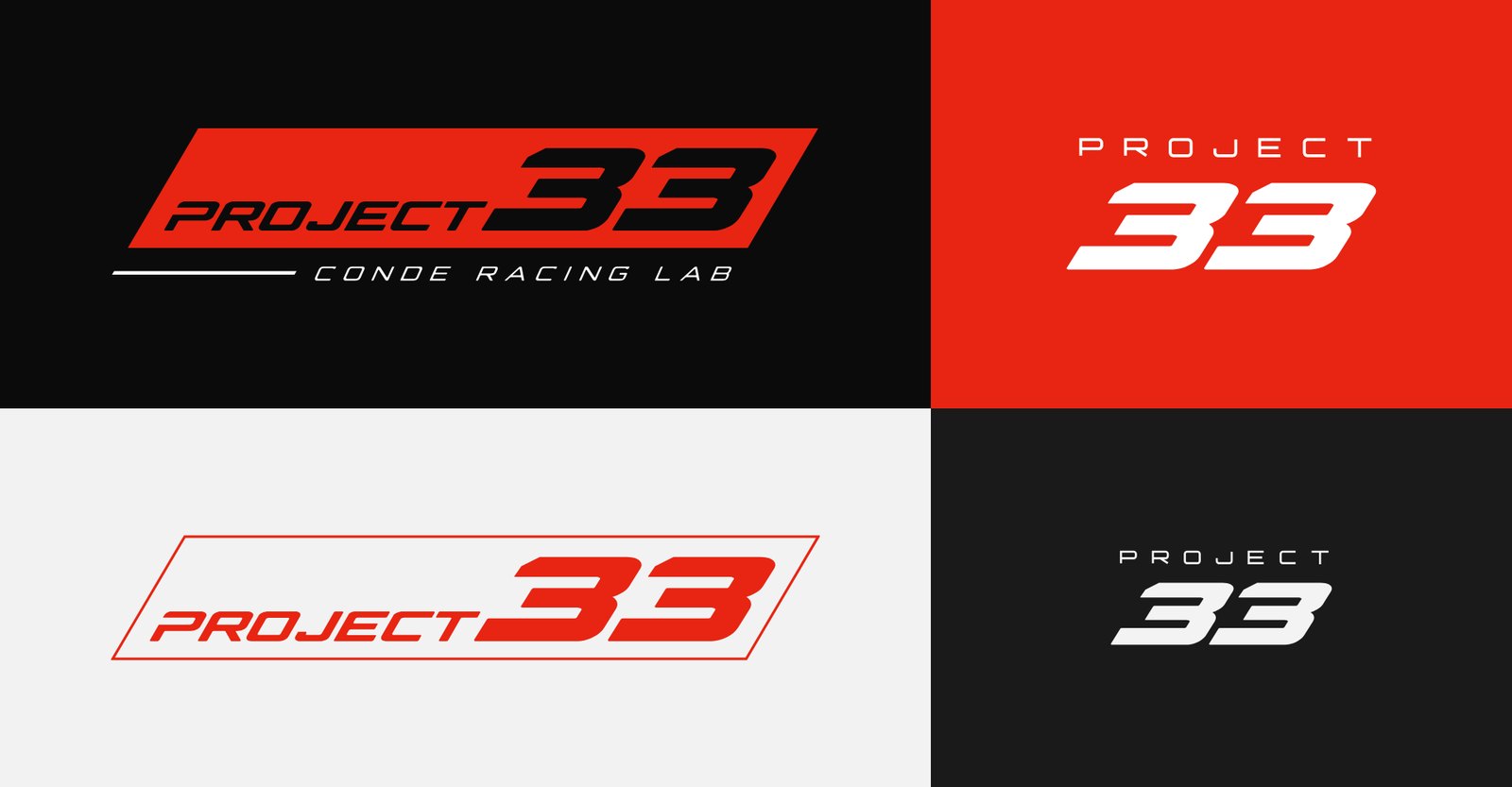
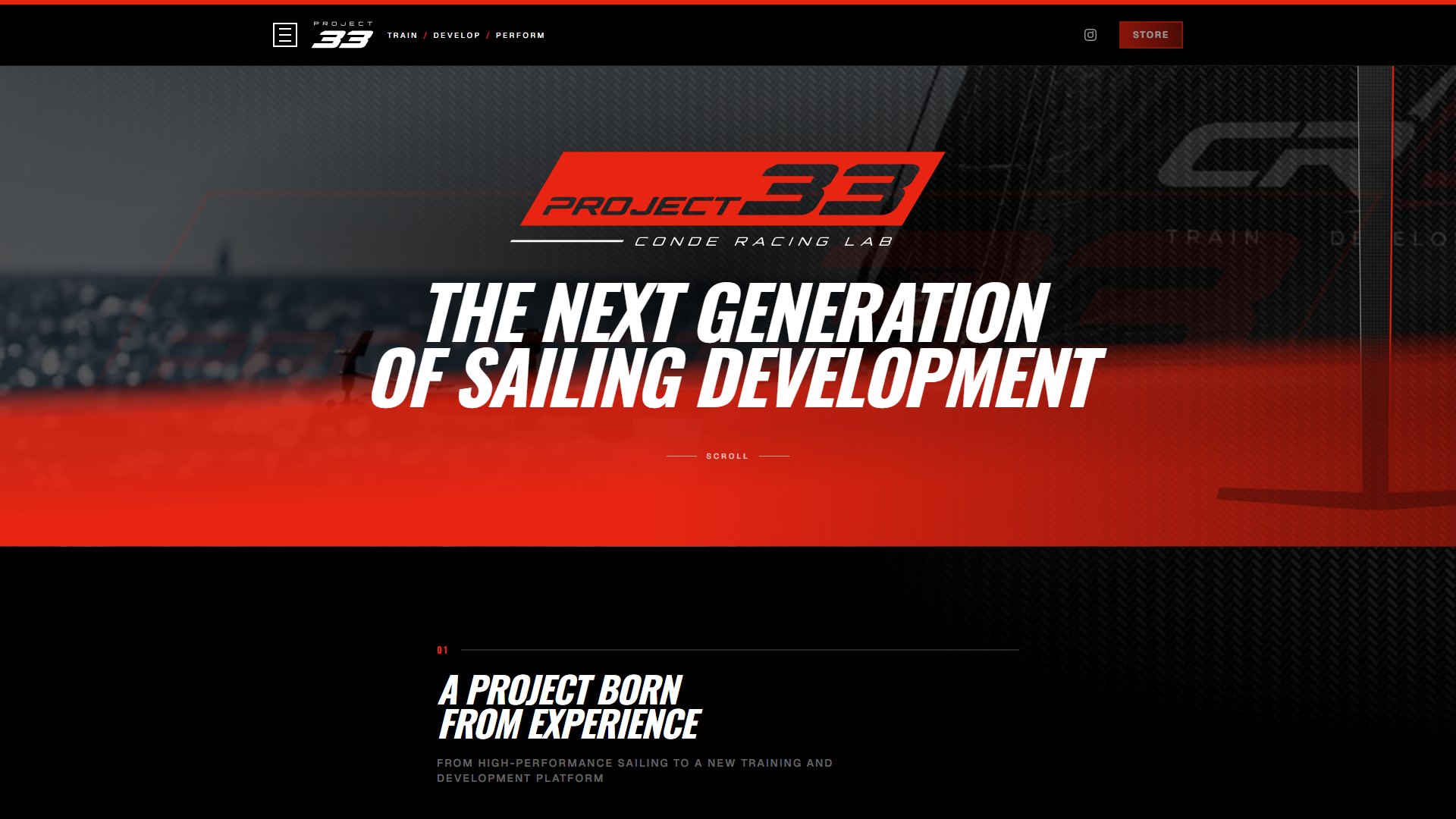
We designed the Project33 mark and visual language around the character of the boat: technical, fast and distinctive. The identity was prepared in formats for everything from the hull and sails to the website and small digital applications, with a guide to keep future use consistent.
2. Build the boat in code
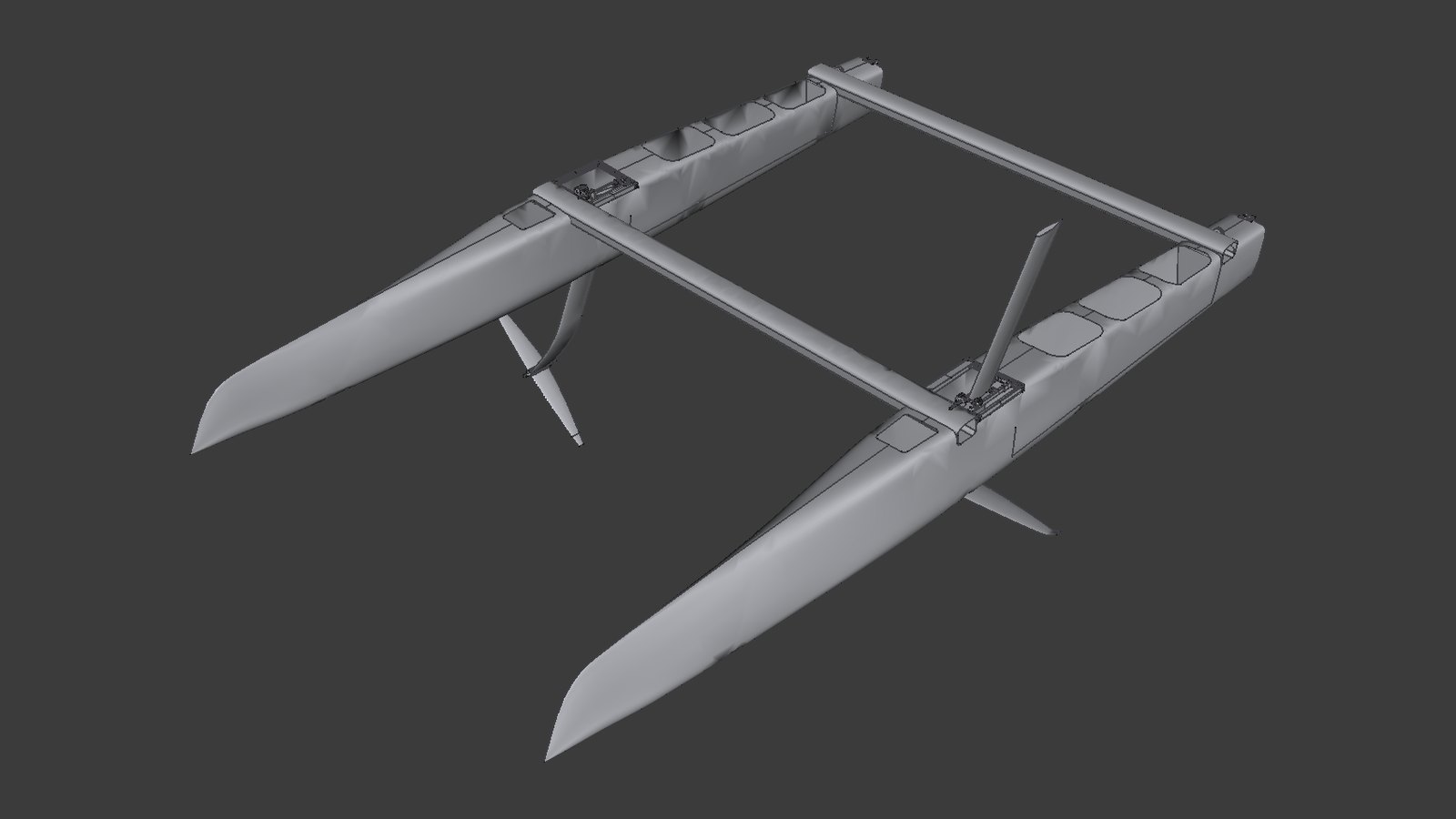
The design team supplied CAD geometry for the hulls, beams and foils. The rig, sails, rudders and deck were not yet modelled, so we used AI-assisted scripting to build the missing geometry as a parametric model. Dimensions and design references remained explicit and editable. This was a visualisation model, not manufacturing CAD.
def mainsail():
    tack_z = BOOM_Z + BOOM_D / 2
    height = MAIN_HEAD_Z - tack_z
    foot = BOOM_LEN - 100

    def z(h):
        return tack_z + h * height

    def luff(h):  # up the mast's trailing edge
        return V(mast_te_x(z(h)), 0, z(h))

    def build(roach):
        # straight foot-to-head, plus roach
        def leech(h):
            w = (foot * (1 - h) + MAIN_HEAD_W * h
                 + roach * math.sin(math.pi * h))
            return V(mast_te_x(z(h)) + w, 0,
                     z(h) - BOOM_DROP * (1 - h))
        return sail(luff, leech, MAIN_CAMBER, n=14)

    # solve for the roach that gives the area
    return fit(build, 0.0, 4000.0, MAIN_AREA)
 3D model
3. Create one source for every image
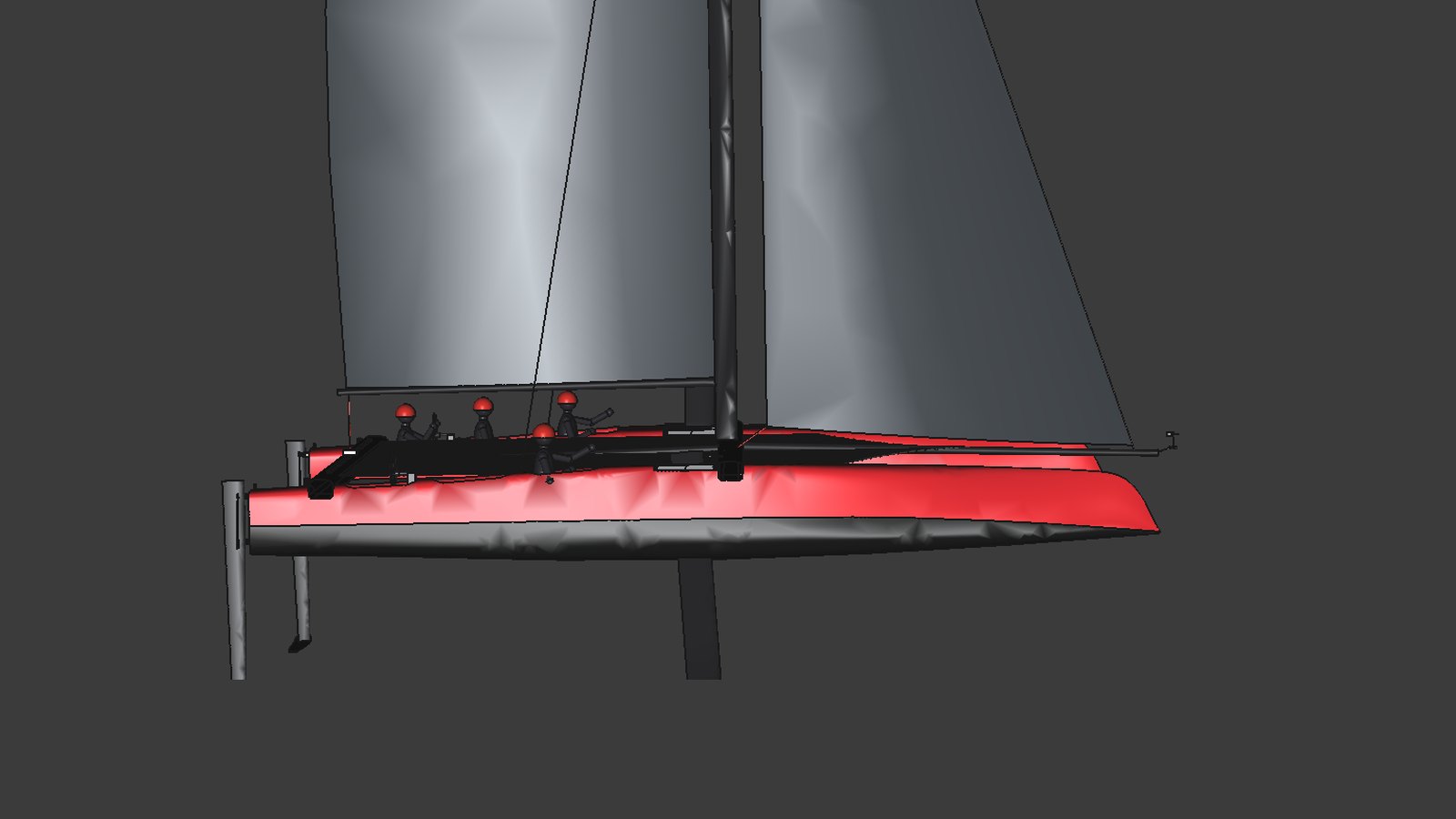
We staged the model in realistic sailing positions and built the water, sky, spray and lighting around it. The same geometry supported the still images and launch film, keeping the boat consistent from one camera angle to another. Visualisations were presented as renders, never as photographs, and images with visible artefacts were left out.
 3D model
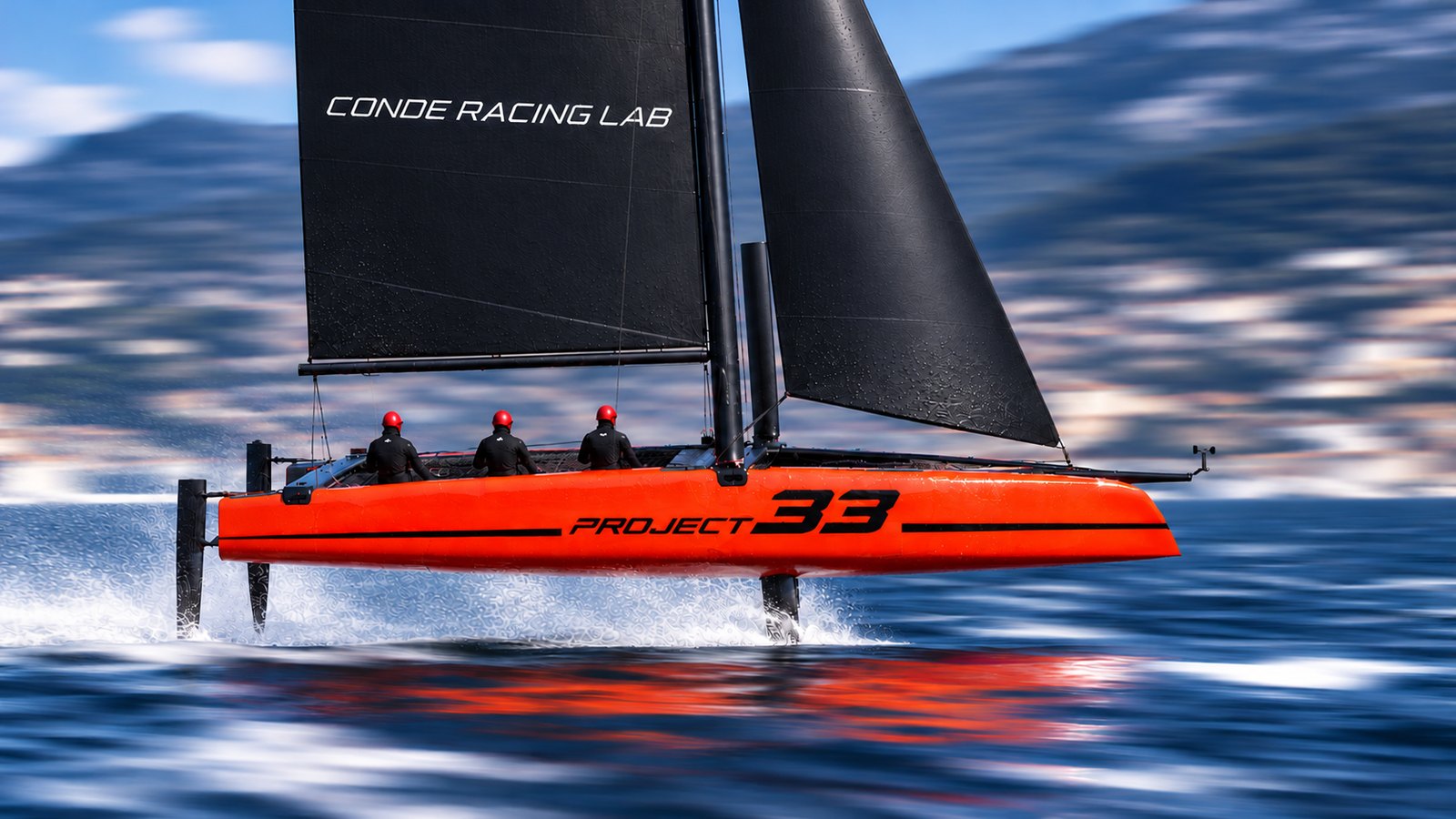 Render
Outcome
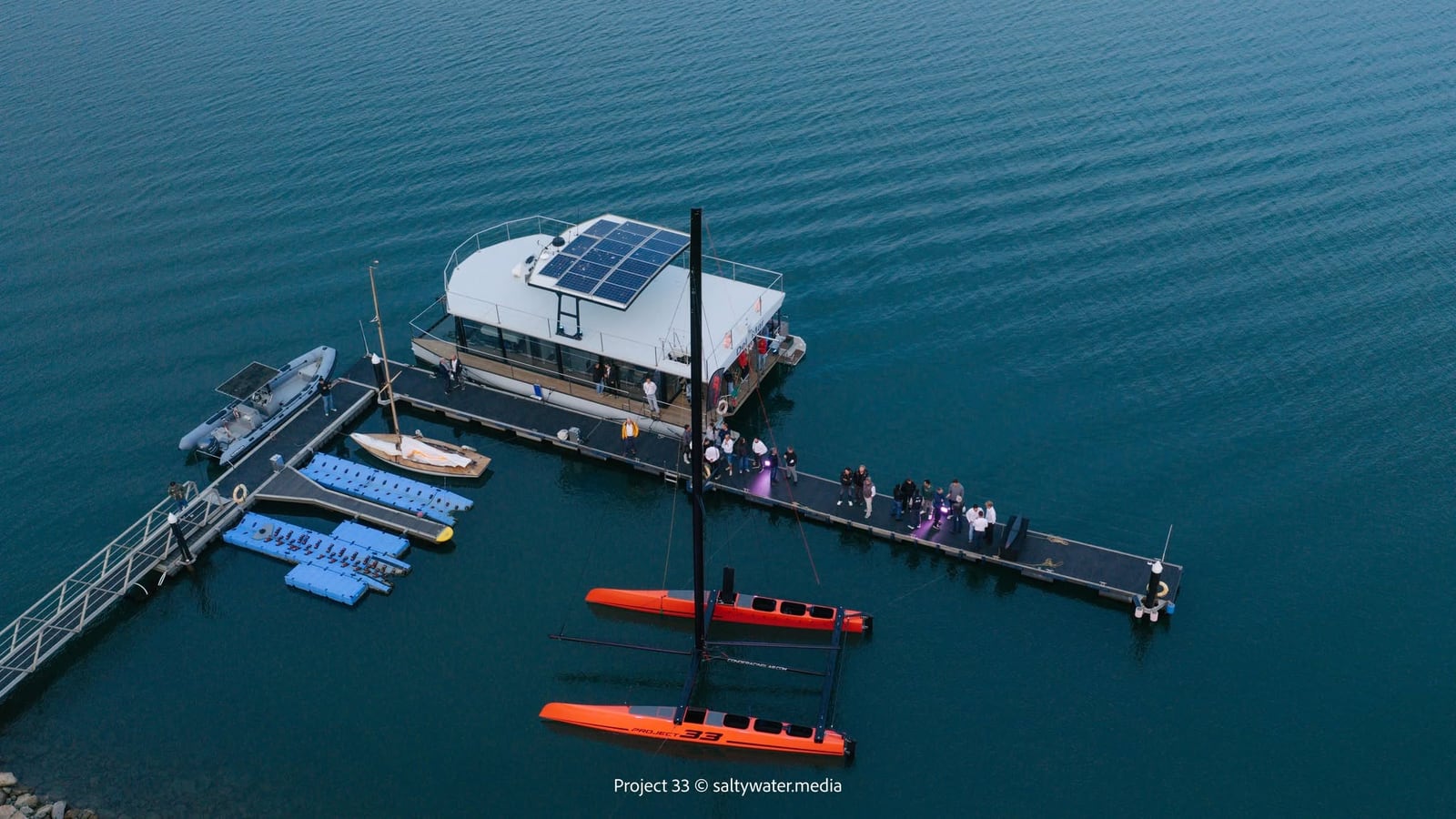
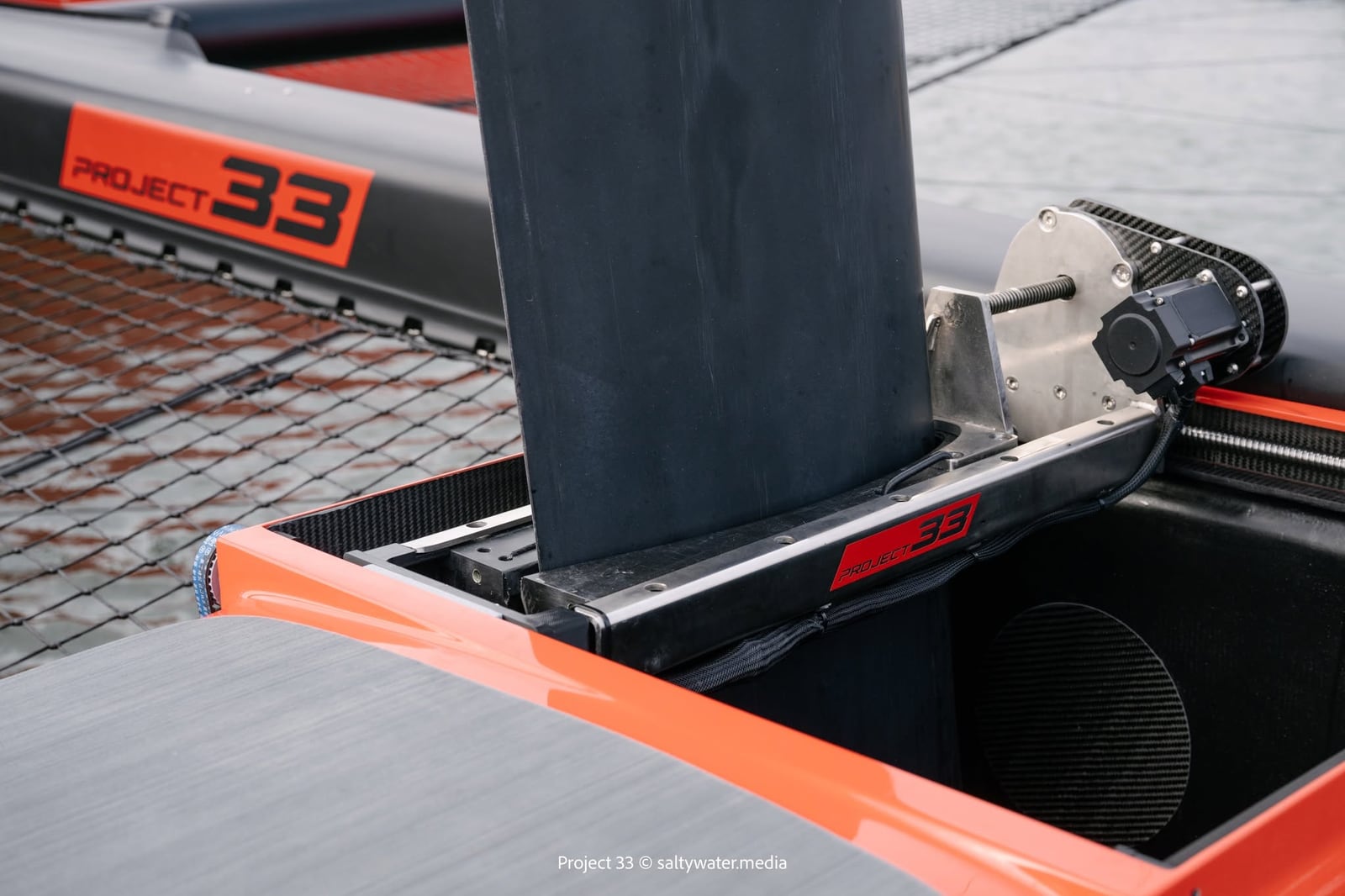
Conde Racing Lab had a complete launch package: a recognisable identity, a finished website and a set of visuals ready before the boat could be photographed. Because the imagery came from one parametric model, design updates could be carried through the renders without rebuilding each view. On 27 October 2026, Project33 was revealed at Costa Nova and the real boat met the water.
Facing a similar challenge?
A first conversation takes about 30 minutes and costs nothing.